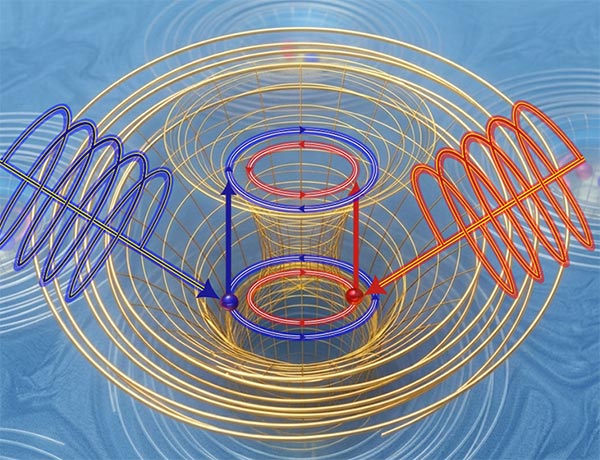
Rutgers University physicists have succeeded in telling apart two distinct populations of particles confined inside the magnetic vortices of a superconductor, a distinction that conventional measurement methods could not resolve. The findings, published in Physical Review Letters, come from experiments on ultrathin iron-based films grown in the Topological Quantum Matter Engineering Lab led by Seongshik Oh. Quantum Zeitgeist reported the results on 29 October 2026.
The work was carried out by a team that included Girsh Blumberg, a Distinguished Professor at Rutgers and a co-author of the paper. According to the university's account of the research, the advance rests on the unusual properties of iron-based superconductors, whose vortices have narrow cores — a feature that made it possible to resolve separate energy levels within them.
Why it matters
Magnetic vortices matter to anyone who wants a superconductor to work reliably outside a laboratory. When these vortices move, energy is lost, and that loss stands in the way of practical uses such as the powerful magnets inside MRI scanners and particle accelerators.
To improve superconductors, scientists need to understand what vortices contain and how they behave, Blumberg said in the Rutgers release. Until now, researchers could confirm that particles were trapped inside vortices but could not directly show how those trapped particles differed from one another. Blumberg noted that earlier methods could detect the trapped states but could not reveal this difference as directly.
The new measurements offer a way to look inside the vortices themselves, which Blumberg compared to the holes in Swiss cheese — numerous confined pockets scattered through the material.
Polarized light as a sorting tool
The team's method relies on polarized light, specifically terahertz radiation, to probe transitions between quantum states inside the vortices. The two particle groups turned out to respond differently depending on the "handedness," or polarization, of the light: one group absorbed energy most readily from left-handed light, while the other favored right-handed light. By looking for these transitions with light of different handedness, the researchers could separate the two contributions, as Blumberg described.
That separation is what makes the technique especially useful, he said, because it can disentangle the contributions of two different groups of particles that were previously measured together.
The Rutgers work builds on a prediction made in 1964 that particles trapped in vortices would occupy distinct energy levels. Those levels are now directly observable through polarized light, according to the university.
Composition shifts the balance
The researchers also varied the composition of their films, changing the amount of selenium, and watched how the ratio of the two particle groups shifted. One sample held nearly four particles of one group for every particle of the other. A second sample showed a roughly even split between the two.
Both samples had similar superconducting transition temperatures, yet their internal vortex populations differed sharply. That contrast points to a direct link between a material's composition and the internal structure of its vortices.
From the light measurements, the team calculated estimates of vortex size and of how long the particles took to respond to the terahertz radiation. They also quantified how strongly each group resists changes in velocity or direction — a property relevant to understanding energy loss — and determined the magnetic field strength needed to break down superconductivity for each group, which speaks to the material's overall stability.
The films themselves were essential to the result. Grown with a molecular beam epitaxy system, they were thin enough to allow precise measurements of how terahertz light interacted with the vortices.
Blumberg suggested the approach could be extended to other superconductors with similar characteristics, giving researchers a new way to inspect the hidden interior of these materials.